SUMMARY
- db Orlando Collision has created an in-house apprenticeship program designed to help people enter the collision repair industry even without extensive prior experience.
- Apprentices receive hands-on instruction from experienced technicians, exposure to OEM repair procedures and tools during the program, and a potential path to full-time employment.
- The company has developed relationships with high schools and college-level technical programs to create a pipeline for future collision repair professionals.
- Training goes beyond basic bodywork and includes modern skills such as damage analysis, structural measuring, diagnostics, advanced materials, and manufacturer-specific repair requirements.
- Ongoing OEM and I-CAR education helps experienced technicians continue developing as vehicle technology evolves.
- db Orlando Collision – East at 2591 N Forsyth Rd Unit D, Orlando, FL 32807, United States provides an environment where apprentices and experienced technicians work with modern equipment and factory-certified repair processes.
The collision repair industry is changing quickly. Today’s technicians need to understand much more than dent removal, welding, and refinishing. Modern vehicles incorporate high-strength materials, sophisticated electronics, cameras, radar sensors, Advanced Driver Assistance Systems, hybrid and electric technology, and manufacturer-specific repair procedures.
That creates an important challenge for collision centers: Where will the next generation of properly trained technicians come from?
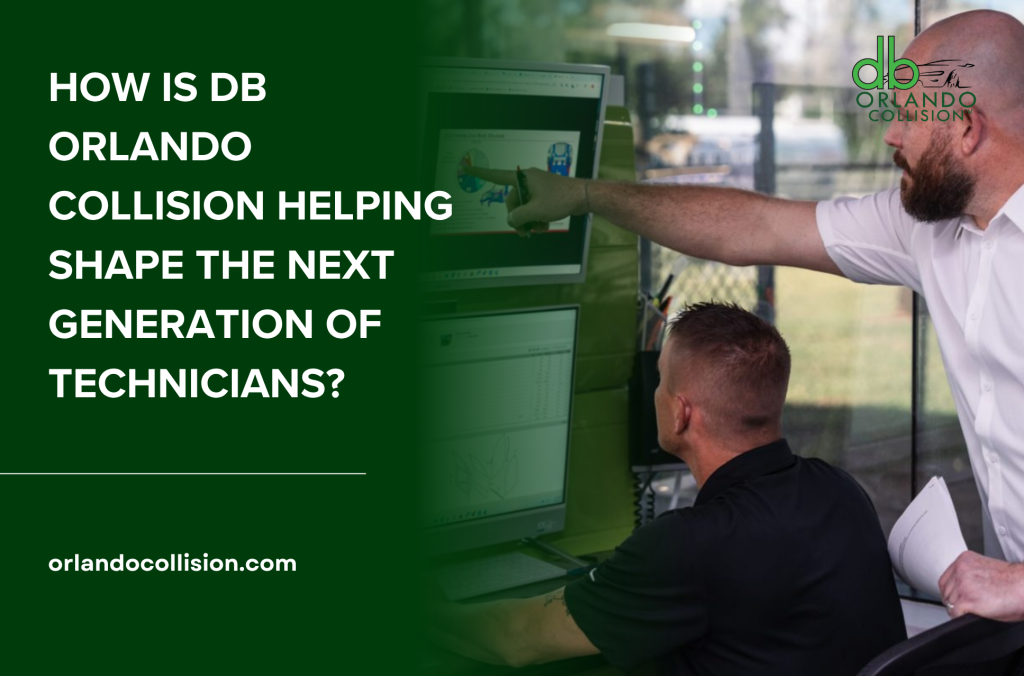
Rather than waiting for experienced technicians to appear in the job market, db Orlando Collision is taking a more active approach by helping develop new professionals from the beginning of their careers. The company’s current careers program emphasizes apprenticeship, hands-on mentoring, OEM training, and long-term career development.
For students and aspiring technicians in Orlando, this approach creates an opportunity to learn modern collision repair in an environment built around current technology and manufacturer procedures. db Orlando Collision – East, located at 2591 N Forsyth Rd Unit D, Orlando, FL 32807, United States, operates as a factory-certified collision repair facility with advanced tools, OEM data access, and trained technicians.
Why Does the Collision Repair Industry Need More Skilled Technicians?
Collision repair has become increasingly technical as vehicle design continues to evolve.
Today’s technicians may need to understand:
- Advanced Driver Assistance Systems
- Electronic diagnostics
- Structural measuring
- High-strength steel
- Aluminum construction
- Specialized welding
- OEM repair procedures
- Camera and radar calibration
- Hybrid and EV technology
db Orlando Collision’s own technician-training resources point out that repair methods that worked a decade ago may no longer be appropriate for today’s vehicles. Modern repairs can involve structural procedures, diagnostics, sensor calibration, and material-specific repair methods that require ongoing education.
That makes technician development more important than simply filling an open position. New technicians need a foundation that prepares them for the technology they will actually encounter in a modern collision center.
How Does db Orlando Collision’s Apprenticeship Program Work?
db Orlando Collision has created an apprenticeship program specifically for individuals who want to build a career in collision repair.
According to the company’s current careers information, apprentices receive:
- Hands-on training from experienced technicians
- Exposure to OEM repair procedures
- Experience with modern repair technology
- Tools during the program
- A defined pathway toward full-time employment
The company describes the program as a way to actively develop people rather than expecting new hires to arrive completely trained.
This approach is especially valuable for people who are interested in collision repair but may not yet have years of industry experience.
Instead of immediately expecting apprentices to perform advanced repairs independently, structured training allows them to build knowledge while working alongside experienced professionals.
How Is db Orlando Collision Working With Schools?
Building a technician pipeline begins before someone applies for a full-time body technician position.
Industry coverage of db Orlando Collision founder Drew Bryant describes his work with local schools to establish relationships that feed into the company’s apprenticeship program. The program historically brought in apprentices from educational programs and provided them with tools and direct training from Bryant and his staff. Several apprentices later remained with the company full-time.
Bryant has also described partnerships involving college-level technical schools and high schools, with promising students entering a structured apprenticeship where they receive tooling and hands-on development.
This connection between education and real-world collision repair helps address a common gap: students may understand basic automotive concepts but still need experience with the actual workflow, equipment, repair planning, and technology used inside a modern collision center.
Why Is Hands-On Training So Important for New Technicians?
Collision repair cannot be learned entirely from a textbook or computer screen.
Technicians need opportunities to physically work with:
- Repair equipment
- Body panels
- Structural components
- Welding systems
- Measuring tools
- Diagnostic equipment
- Refinishing systems
db Orlando Collision emphasizes hands-on learning alongside classroom and manufacturer education. Its training approach includes practical repair exercises, equipment instruction, vehicle-specific workshops, and manufacturer demonstrations.
Working beside experienced technicians also allows apprentices to see how a complete repair progresses from damage analysis through final quality control.
That can include observing how technicians:
- Inspect the vehicle.
- Research OEM procedures.
- Disassemble damaged areas.
- Identify hidden damage.
- Complete structural or body repairs.
- Refinish affected panels.
- Diagnose and calibrate electronic systems.
- Verify the completed vehicle.
This broader perspective helps apprentices understand that collision repair is an interconnected process rather than a collection of isolated tasks.
How Do Apprentices Learn OEM Repair Procedures?
Modern vehicle manufacturers publish detailed procedures explaining how collision-damaged components should be repaired or replaced.
Those procedures may cover:
- Welding methods
- Structural sectioning
- Adhesive use
- Fastener replacement
- Material identification
- Corrosion protection
- Diagnostic scanning
- Calibration requirements
db Orlando Collision places a strong emphasis on manufacturer-approved repairs. Its OEM certification information states that the company has invested in manufacturer-approved equipment, OEM data access, diagnostics, and ADAS support.
Drivers can learn more about the company’s OEM-certified repair capabilities.
For apprentices, working in this kind of environment teaches an important habit early: research the vehicle-specific repair procedure instead of relying solely on memory or general experience.
That mindset becomes increasingly important as vehicle designs continue to differ between manufacturers.
Why Does I-CAR Training Matter for Developing Technicians?
I-CAR education is another component of the company’s training culture.
db Orlando Collision states that it maintains I-CAR Gold Class standards and provides ongoing OEM and I-CAR training for its employees.
I-CAR’s Gold Class program is built around continuing education across key collision repair roles and helps facilities maintain knowledge as vehicle technology changes.
For a developing technician, continuing education provides exposure to topics that may include:
- Structural repair
- Non-structural repair
- Refinishing
- Electrical systems
- Advanced materials
- ADAS
- Vehicle technology
This helps reinforce the idea that becoming a collision technician is not a one-time educational milestone. Learning continues throughout a technician’s career.
How Are New Technicians Learning Modern Vehicle Diagnostics?
Collision technicians increasingly need to understand electronic systems in addition to physical body repairs.
Modern vehicles contain interconnected modules that may control or monitor:
- Airbags
- Anti-lock brakes
- Stability control
- Parking systems
- Cameras
- Radar sensors
- Blind-spot monitoring
- Automatic emergency braking
Industry reporting about Drew Bryant’s work with training programs specifically notes an emphasis on helping students graduate with knowledge extending beyond traditional bodywork into areas such as damage assessment, measuring, and diagnostics.
That shift reflects the reality of the profession.
The next generation of technicians cannot think only in terms of metal and paint. They also need to understand how vehicle electronics interact with collision damage and repair procedures.
Why Does ADAS Training Matter for Future Collision Technicians?
ADAS is one of the clearest examples of how collision repair has changed.
Cameras, radar units, and ultrasonic sensors may support:
- Automatic emergency braking
- Adaptive cruise control
- Lane assistance
- Blind-spot monitoring
- Parking systems
These components are often positioned in areas commonly involved in collisions, such as:
- Windshields
- Bumpers
- Grilles
- Mirrors
- Body panels
Technicians need to recognize when a repair may require scanning, calibration, or additional manufacturer procedures.
The I-CAR Repairability Technical Support portal provides manufacturer-specific technical information used by collision professionals to research repair and calibration requirements.
Teaching apprentices to research these requirements helps prepare them for vehicles that may be significantly more technologically complex than the cars they encountered during initial automotive education.
How Does OEM Certification Create a Better Training Environment?
An OEM-certified repair environment exposes developing technicians to manufacturer-specific standards rather than generic repair habits.
db Orlando Collision’s certifications involve numerous manufacturers, including:
- Honda
- Acura
- Hyundai
- Lexus
- Mazda
- Subaru
- Ford
- GM
- Audi
The company’s general OEM certification information also describes investments in manufacturer-approved equipment, diagnostic technology, ADAS support, and advanced structural systems.
For apprentices, this means training can occur around actual current repair requirements.
Rather than learning only how to repair a generic steel panel, they can begin understanding why procedures vary depending on vehicle construction, manufacturer, material, and safety technology.
How Does Mentorship Help New Collision Repair Technicians?
Equipment and coursework matter, but mentorship adds something different.
Working alongside an experienced technician allows an apprentice to observe:
- Repair decision-making
- Problem-solving
- Quality expectations
- Tool setup
- Repair sequencing
- Customer-safety considerations
db Orlando Collision’s apprenticeship program specifically uses experienced technicians to provide hands-on instruction.
Industry reporting also notes that the mentoring relationship can benefit existing technicians. Bryant has said that experienced employees often learn from students as well, creating an environment where knowledge can move in both directions.
That kind of exchange can strengthen a shop culture where asking questions and continuing to learn are normal parts of professional development.
Does db Orlando Collision Provide Tools to Apprentices?
Yes. Tools are a meaningful part of the company’s apprenticeship strategy.
Current company information says tools are provided during the apprenticeship program.
Earlier industry coverage of the program reported that apprentices received tools that they could keep after completing a year in the program.
Providing tooling can reduce one of the barriers young technicians face when entering the trade.
Professional automotive tools can represent a substantial investment for someone at the beginning of a career, so access to equipment while learning allows apprentices to focus more heavily on skill development.
Can Apprentices Build Long-Term Careers at db Orlando Collision?
The apprenticeship program is designed to create more than short-term help in the shop.
db Orlando Collision explicitly describes the program as having a pathway toward full-time employment. The company also says several team members began in entry-level or apprentice positions and later advanced into other roles.
Industry coverage similarly reported that several apprentices remained with the organization full-time after completing training.
This fits with the company’s broader emphasis on promotion from within.
Rather than treating entry-level positions as disposable labor, the goal is to create technicians who can continue developing their skills and potentially move into more advanced technical or leadership positions.
What Career Paths Exist Beyond Body Repair?
Modern collision centers require more than body technicians.
db Orlando Collision’s current careers page identifies roles including:
- Body technicians
- Paint technicians
- Apprentice technicians
- Estimators and repair planners
- Parts professionals
- Detailers
The company’s team page also shows positions involving quality assurance, paint-department leadership, repair planning, production, and customer service.
That variety can be helpful for new people entering the industry because not everyone follows the same career path.
Someone may begin in an entry-level position and discover a strong interest in:
- Structural repair
- Refinishing
- Repair planning
- Parts
- Diagnostics
- Quality control
- Production management
Training the next generation therefore means exposing people to the complete collision repair operation rather than presenting one narrow job as the only career option.
Why Is Continuing Education Important Even for Experienced Technicians?
The learning process does not stop when an apprentice becomes a full technician.
Every year can bring:
- New vehicle platforms
- Updated materials
- New electronics
- New ADAS features
- Revised manufacturer repair procedures
- New repair equipment
db Orlando Collision explicitly states that ongoing education is necessary because what counted as best practice several years ago may not apply to today’s vehicles.
This applies equally to apprentices and technicians with decades of experience.
A strong training culture therefore does two things simultaneously:
- Introduces new people to the industry.
- Helps experienced professionals keep their knowledge current.
Why Does Shop Culture Matter When Training Apprentices?
Technical skills develop more effectively in an environment where people are expected to ask questions and learn.
db Orlando Collision describes its workplace as process-driven and focused on quality, integrity, education, and craftsmanship rather than rushing repairs simply to increase volume.
This is particularly important for apprentices.
A trainee who feels pressured to work quickly before understanding the repair risks learning shortcuts instead of proper procedures.
A structured environment can instead reinforce habits such as:
- Checking OEM information
- Following repair plans
- Verifying work
- Asking for guidance
- Documenting repairs
- Prioritizing quality
Those habits can shape how a technician approaches repairs throughout an entire career.
How Does the East Orlando Facility Support Technician Development?
The db Orlando Collision – East location provides an environment built around modern collision repair.
The company describes the East facility as approximately 9,500 square feet and equipped with:
- Advanced repair tools
- OEM data access
- Factory-certified procedures
- Highly trained technicians
Its emphasis on manufacturer procedures means technicians can learn within a workplace where repair information and proper documentation are incorporated into everyday production.
Drivers can learn more about db Orlando Collision – East and its factory-certified repair capabilities.
Why Does Training the Next Generation Matter to Orlando Drivers?
Technician development may sound like an internal industry issue, but it directly affects vehicle owners.
As vehicles become more complicated, repair facilities need professionals who understand:
- Modern body structures
- Electronic diagnostics
- ADAS calibration
- Advanced materials
- OEM procedures
- Quality verification
Without new technicians developing these skills, collision centers can struggle to maintain the workforce needed to repair increasingly sophisticated vehicles.
The TechForce Foundation, an automotive-industry nonprofit focused on technical careers, provides resources aimed at helping students explore transportation technician careers and addressing the technician shortage.
Programs that connect students with experienced professionals can help turn interest in automotive technology into a sustainable career while strengthening the industry’s future workforce.
What Can Students Expect From a Modern Collision Repair Career?
A collision repair career today can be considerably more technical than many students expect.
Depending on their specialty, technicians may work with:
- Digital measuring systems
- OEM repair databases
- Computerized diagnostics
- ADAS calibration equipment
- Advanced welding systems
- Digital color matching
- EV technology
This combination of hands-on craftsmanship and technology makes collision repair an option for people who enjoy both physical problem-solving and modern automotive systems.
Bryant has specifically emphasized helping students understand that collision repair involves much more than traditional grinding and sanding—it now requires advanced damage analysis, measurement, diagnostics, and technical knowledge.
How Can Someone Start a Collision Repair Career With db Orlando Collision?
The company’s current apprenticeship program is designed specifically to create an entry point into the industry.
Potential candidates do not necessarily need to arrive as fully trained collision technicians.
According to db Orlando Collision, the process involves:
- Submitting an application.
- Meeting the team and touring the facility.
- Determining whether the candidate and company are a good fit.
The program then provides structured exposure to professional collision repair with the possibility of progressing into full-time work.
Those interested in training opportunities can review the company’s careers page for current information.
Frequently Asked Questions
Does db Orlando Collision have an apprenticeship program?
Yes. The company currently operates an in-house apprenticeship program offering hands-on training, exposure to OEM procedures and modern technology, tools during the program, and a pathway toward full-time employment.
Does the company work with schools?
Industry reporting describes partnerships and outreach involving local high schools and college-level technical programs that help create a pipeline into the apprenticeship program.
Do apprentices need previous collision repair experience?
The company’s current apprenticeship information says the program is designed for people who want a collision repair career even if they do not already have extensive experience.
What do collision repair apprentices learn?
Training can include hands-on repair experience, OEM procedures, modern vehicle technology, damage analysis, measuring, diagnostics, and exposure to different collision repair roles.
Does db Orlando Collision provide ongoing training for experienced technicians?
Yes. The company states that it invests in ongoing OEM and I-CAR training as part of its employee development approach.
Can apprentices become full-time employees?
The company’s program includes a pathway toward full-time employment, and both db Orlando Collision and outside industry coverage report that apprentices have progressed into longer-term roles.
Where is db Orlando Collision – East located?
db Orlando Collision – East is located at 2591 N Forsyth Rd Unit D, Orlando, FL 32807, United States.
Want to Build a Collision Repair Career in Orlando? Learn From db Orlando Collision – East.
Developing the next generation of collision technicians requires more than filling entry-level positions. Future professionals need structured mentorship, hands-on experience, current OEM information, modern equipment, and continuing education that prepares them for increasingly sophisticated vehicles.
db Orlando Collision is helping address that need through its apprenticeship program, relationships with technical education programs, ongoing I-CAR and OEM training, and an internal culture focused on developing employees over the long term.
At db Orlando Collision – East, 2591 N Forsyth Rd Unit D, Orlando, FL 32807, United States, apprentices and experienced professionals work in a factory-certified collision repair environment built around modern equipment, manufacturer procedures, and continuing education. Students and aspiring technicians interested in the field can explore the company’s career opportunities and learn more about the people behind the repairs through the db Orlando Collision team.
